MMD BLOG


CATEGORY:

PARENTING + MINDFULNESS

HOW TO INSPIRE GENEROSITY IN OUR KIDS

 Modern Mommy Doc


PUBLICATION DATE:

December 14, 2020

HOW TO INSPIRE GENEROSITY IN OUR KIDS

 Modern Mommy Doc

CATEGORY: PARENTING + MINDFULNESS

One of the funny things about motherhood is how easy it is to get caught up in the minutiae of the day-to-day stuff. We’ve all been there, right? You’re obsessed with getting your kids to eat broccoli or just sing something other than Disney songs for a minute. Then suddenly you’re facing down a whole new set of challenges, and those worries that seemed so big for so long are in the rearview mirror…and you’re not even really sure when they stopped being an issue.


In some ways, this is just part and parcel of parenting. But as modern parents, we also have tools to help us stop, take a step back, and, as Dr. Kenneth R. Ginsburg puts it, think about, “the thirty-five-year-olds we want [our children] to be.”


Dr. Ginsburg uses this example to explain his Seven C’s of Resilience. And it’s incredibly powerful. (I strongly encourage you to check out the concept in both his book and my program on sensitively responding to kids’ big emotions.)


But today I’m thinking about the bigger picture. Maybe it’s the season. Maybe it’s just that my own kids recently turned 7 and 4. Whatever the cause, lately I’ve been focused on that very idea — what kind of women do I want my daughters to become? And one of the qualities at the top of my list is generosity.


Generosity in Action

Generosity is one of those qualities that can be hard to pin down. Like “kind” or “wise,” being generous often gets defined by imperfect examples or, worse, examples of what NOT to do. (“Keeping all the cupcakes for yourself is not generous!”)


So where does that leave us as parents who want to nurture our children into decent adults? Part of the answer lies in our modeling the very qualities we want our children to have. But some qualities are worth a little extra effort, a little extra intentionality. And I think generosity is one of them.


How to Grow a Giving Heart


The holiday season lends itself nicely to the following ideas but, like exercising or using moisturizer, these are good habits we should practice all year long. 


Generosity starts with gratitude, so make a point of saying “thank you” for things big (“Thank you for sharing your favorite toy”) and small (“Thank you for clearing your plate”). Need more structure? Think about starting a daily “thankful for” conversation over dinner or at bedtime when everyone shares what s/he is grateful for that day.


Write weekly or monthly “sunshine notes” that express appreciation for kindness or a good deed. The whole family can get in on this one, and you may be surprised where your notes take you. In addition to writing them to other family members and teachers, you can reach out to coaches, babysitters, neighbors, bus drivers — inclusivity is key!


Talk about feelings. Putting words to emotions like happy, sad, frustrated, or worried gives kids the emotional vocabulary they need to develop more complex characteristics like kindness and generosity. Reading books together is a great way to create a dialogue around emotional literacy, and you can find some great ones in my blog on holiday gift ideas.


Encourage allowance sharing. If you give your child an allowance, suggest setting aside a portion of it for a charitable organization. Kids are natural givers, especially when they can relate to the cause. Consider looking for nonprofits that help pets or other children in need.


Give back as a family. The family that gives together, grows together. Think about what you can all do to make the world a little brighter, from volunteering, to “adopting” a family for the holidays, to writing cards to children spending the holidays in the hospital or elderly people in assisted-living facilities.


Believe in Miracles


I’m all for practicing mindful motherhood, but I also take comfort in trusting in our children’s better natures. Last week, as we were driving along the freeway, my seven-year-old declared out of nowhere, “I need a lot of money.”


“Oh, yeah?” I asked. “For what?”


I’ll be honest. I fully expected to hear her plans to get a new Land of Stories book for herself or that extra pair of winter gloves she’d been eyeing.


“I’m thinking I’m going to walk down the street once I have a lot of money,” she said, “and give it to people who don’t have any. I could use a fan and blow it everywhere.


“I’ll give them a little note,” she added. “It will say, ‘Use this to get some good food and a warm bed. And, if you have enough for yourself, give it to someone else.’”


The seed is there, Mama. We just have to nurture it along.


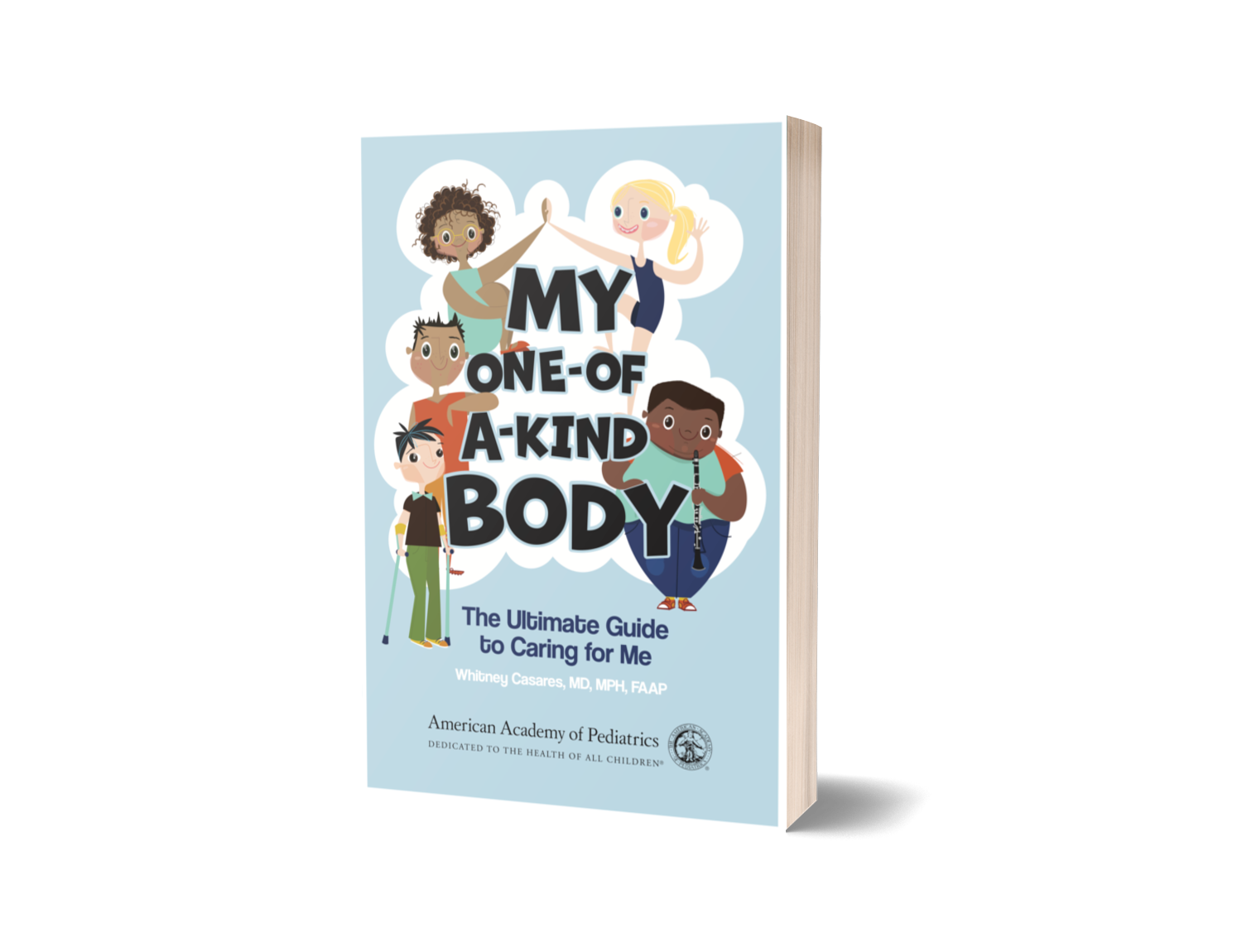
Raising Body-Confident Kids Starts at the Doctor's Office!

START NOW
By Dr. Whitney December 17, 2025
About the Episode: In this episode, Dr. Whitney sits down with Dr. Jay Gargus and Dave Justus from NeuroQure to discuss the power of early clarity when it comes to autism detection and why earlier intervention can fundamentally change outcomes for childre n and families. Dr. Gargus explains the science behind early behavioral therapies and why their impact goes far beyond short-term skill-building. Research shows that early, evidence-based interventions can lead to measurable, lifelong improvements in IQ, so cial skills, independence, and educational placement, often determining whether a child can thrive in mainstream education or requires ongoing specialized support. The conversation also tackles a critical and often overlooked issue: access. Dave Justus shares the personal motivation behind NeuroQure’s work and explains why the test is being launched at cost, with installment plans and employer subsidies, while the team works toward insurance coverage. The goal is to prevent families from losing precious years waiting for answers. Together, they emphasize a hopeful message for parents: families don’t need to wait for a future “silver bullet.” We already have therapies that work and getting kids connected to them earlier can change the course of a lifetime. In this episode, we discuss: Why early autism detection leads to lifelong changes—not just short-term gains What a 17-point IQ difference actually means for education, independence, and quality of life How early intervention can shift developmental trajectories as early as 6 months The science and validation behind current autism therapies Why NeuroQure is pricing testing at cost while pursuing insurance coverage How early clarity can reduce long-term strain on families, schools, and healthcare systems This episode is a powerful reminder that timing matters and that early access to answers can make an extraordinary difference for children and the families who love them. About Our Guest: Dr. Jay Gargus, MD, PhD is a physician-scientist and nationally recognized expert in neurodevelopmental disorders, with decades of experience researching the biological underpinnings of autism. His work has focused on translating well-established science into meaningful, real-world interventions that can improve lifelong outcomes for children. Dr. Gargus emphasizes that early, evidence-based therapies are already available—and that connecting families to them sooner can fundamentally change developmental trajectories. Dave Justus is a parent and the founder of NeuroQure, whose work is driven by personal experience navigating delayed autism diagnosis and intervention. Motivated by the belief that early clarity can spare families years of uncertainty, Dave is focused on expanding access to early testing through cost-based pricing and ongoing efforts to secure insurance coverage. His mission is simple but powerful: ensure families don’t have to wait for answers that could change everything. Want to Start Raising Body-Confident Kids Today? 📘 Order the Book Order your copy of My One-of-a-Kind Body 👉 www.raisingbodyconfidentkids.com/books 🎁 Claim Your Free Bonus When you order on our site, you’ll also get access to a FREE video mini-course with five bite-sized lessons for parents. In just 25 minutes, you’ll walk away with: Simple, script-style ways to respond when your kid says, “I hate my thighs” How to talk about health without weight talk What to do when your own inner critic shows up How to interrupt diet culture at home The first step to raising a body-confident kid, even if you didn’t grow up as one 📩 Subscribe to The Modern Mommy Doc Podcast for more episodes on parenting with confidence and clarity. Leave a review using the hashtag #ModernMommyDoc.
By Dr. Whitney November 13, 2025
Stop being so busy, and start being more present.
By Dr. Whitney November 5, 2025
Starting out right with solids doesn't have to be so scary.
By Dr. Whitney October 29, 2025
What if YOU are the one who needs to calm down first?

Welcome! Get the information you need to win at parenting without losing yourself.

LEARN MORE

My Kids' Book on Body Confidence is Finally Here!


Wish your partner would do more to lessen your mental load?


Want to make self-care a priority but not sure how to?


SIGN UP FOR SUSTAINABLE SELF-CARE. IT'S FREE. CLICK HERE


FRESH

ON THE PODCAST


By Dr. Whitney December 17, 2025
About the Episode: In this episode, Dr. Whitney sits down with Dr. Jay Gargus and Dave Justus from NeuroQure to discuss the power of early clarity when it comes to autism detection and why earlier intervention can fundamentally change outcomes for childre n and families. Dr. Gargus explains the science behind early behavioral therapies and why their impact goes far beyond short-term skill-building. Research shows that early, evidence-based interventions can lead to measurable, lifelong improvements in IQ, so cial skills, independence, and educational placement, often determining whether a child can thrive in mainstream education or requires ongoing specialized support. The conversation also tackles a critical and often overlooked issue: access. Dave Justus shares the personal motivation behind NeuroQure’s work and explains why the test is being launched at cost, with installment plans and employer subsidies, while the team works toward insurance coverage. The goal is to prevent families from losing precious years waiting for answers. Together, they emphasize a hopeful message for parents: families don’t need to wait for a future “silver bullet.” We already have therapies that work and getting kids connected to them earlier can change the course of a lifetime. In this episode, we discuss: Why early autism detection leads to lifelong changes—not just short-term gains What a 17-point IQ difference actually means for education, independence, and quality of life How early intervention can shift developmental trajectories as early as 6 months The science and validation behind current autism therapies Why NeuroQure is pricing testing at cost while pursuing insurance coverage How early clarity can reduce long-term strain on families, schools, and healthcare systems This episode is a powerful reminder that timing matters and that early access to answers can make an extraordinary difference for children and the families who love them. About Our Guest: Dr. Jay Gargus, MD, PhD is a physician-scientist and nationally recognized expert in neurodevelopmental disorders, with decades of experience researching the biological underpinnings of autism. His work has focused on translating well-established science into meaningful, real-world interventions that can improve lifelong outcomes for children. Dr. Gargus emphasizes that early, evidence-based therapies are already available—and that connecting families to them sooner can fundamentally change developmental trajectories. Dave Justus is a parent and the founder of NeuroQure, whose work is driven by personal experience navigating delayed autism diagnosis and intervention. Motivated by the belief that early clarity can spare families years of uncertainty, Dave is focused on expanding access to early testing through cost-based pricing and ongoing efforts to secure insurance coverage. His mission is simple but powerful: ensure families don’t have to wait for answers that could change everything. Want to Start Raising Body-Confident Kids Today? 📘 Order the Book Order your copy of My One-of-a-Kind Body 👉 www.raisingbodyconfidentkids.com/books 🎁 Claim Your Free Bonus When you order on our site, you’ll also get access to a FREE video mini-course with five bite-sized lessons for parents. In just 25 minutes, you’ll walk away with: Simple, script-style ways to respond when your kid says, “I hate my thighs” How to talk about health without weight talk What to do when your own inner critic shows up How to interrupt diet culture at home The first step to raising a body-confident kid, even if you didn’t grow up as one 📩 Subscribe to The Modern Mommy Doc Podcast for more episodes on parenting with confidence and clarity. Leave a review using the hashtag #ModernMommyDoc.
By Dr. Whitney November 13, 2025
Stop being so busy, and start being more present.