MMD BLOG


CATEGORY:

PARENTING + BABIES

WHY IT'S PERFECTLY FINE IF YOU FORGET TO MAKE YOUR SECOND CHILD A BABY BOOK

 Modern Mommy Doc


PUBLICATION DATE:

January 23, 2017

WHY IT'S PERFECTLY FINE IF YOU FORGET TO MAKE YOUR SECOND CHILD A BABY BOOK

 Modern Mommy Doc

CATEGORY: PARENTING + BABIES

I’m not sure how many teeth my youngest daughter has. Is it eight or ten? It’s the type of thing that, with my firstborn, I would’ve paid attention to. I would’ve written it down in her baby book. I would’ve sent a million pictures of each shiny white chiclet to her grandmas as they broke through her tender gums. But, with my second child, I’m just not keeping track. Obviously, I could count them but, when it comes down to it, I don’t care.


You don’t CARE? Yep, that’s right. I love that little girl like nobody’s business but I couldn't care less how many teeth or how much hair or exactly how many words she has.


I actually couldn’t care less about a lot of the small details.


Now, before you write me a strongly-worded email about not playing favorites with my kids or loving one of them less, the memories I’ve overlooked aren’t big things. They’re just tiny little details that don’t seem to matter as much this time around. I care that she is safe and happy and thriving. Plus she does have a relatively skimpy baby book that I plan on filling out sometime before she enters college. More importantly, I would argue that my minor forgetfulness proves my improved parenting prowess, my hard-earned second-time parent nonchalance (for help on how to kill it when you're a NEW mom, click here to get our free guide).


I’m confident the same is true for all you second- (or third- or fourth-) timers out there. Sure, we’re too preoccupied to notice a lot of things, but that level of reduced obsession also helps us let it go when it comes to the more annoying parts of parenthood that are only “solved” through patience- things like sleepless nights and spit-up-stained clothes. We don’t get so caught up in mini milestones or challenges and we care more about the big picture. We also know that loving all our kids well doesn’t mean loving them with calculated equality.


My love for my two girls is different, not more or less, just different.


They have their own temperaments and their own love languages. One of them needs tickles and laughter and loud most of the time. The other needs quiet and secure and cozy. They have their own preferences. One loves everything ballet and pink. The other loves soccer balls and dirt. Most importantly, they have their own parenting needs. One is rowdy and bull-headed. The other is opinionated but anxious.


A lot of parents I meet worry about how they’ll love or parent their kids equally when their second baby arrives. They worry about how they’ll extend the same level of energy they gave their first child to another boy or girl. They wonder if they have it in them - if they could ever love another human being so intensely.


I completely understand. Sure, my firstborn was a colicky disaster the first three months of her life and she made it impossible for me to get a good night’s sleep for her first year. But, before her sister arrived, she was my whole world (of course, along with my partner -he’s pretty cool, too).


I asked my friend, a seasoned mom herself, how she made room in her heart when she had her second child.


“I remember the day I brought Lilly home from the hospital. Her big brother Jack was looking over at her and he made some gesture toward her. It was a sudden move with his arm and, in my sleepless state, I thought that he might injure her, that for whatever reason he might hit her or that he was being aggressive towards her. It was a split-moment feeling that I had, probably due to high levels of postpartum hormones and low levels of emotional reserves, and definitely not based in reality.


"I felt myself instinctively protecting my baby, jerking her away from my son, crouching over her so that he couldn’t get to her. And, I also got, for one split moment, really angry at him. The mama bear in me came out that day. I’d had that protective feeling billions of times for him throughout his short life- when another child said something unkind at school, when he injured himself playing at the park – but I hadn’t thought it was possible until that incident to protect another person like that. That was the moment that I realized I could love two people with the same level of raw intensity at once.“


I learned exactly what she meant with my own kids when that protective feeling kicked in for my second child postpartum in some maternal instinct moment. I’ve been over the moon for her ever since.


Still, as she grows up and becomes more and more human, it’s tempting to see second-time parenting as an exercise in missed documentation and attention.


It’s the same for all multi-kid families. We’re busy once we have two and we feel worried that our second (or third or fourth) child will, eventually, feel slighted by us. It’s hard to not constantly compare what we’re doing for one child versus the other. We could try to give exactly the same level of attention and time, to assure that everything is fair. But, if we are constantly aiming to make everything we do with or for our kids perfectly equal, we miss out on the things that make them feel sincerely valued and cared for. We also end up pretty tired from all that math.


Thank goodness there is an upside to divided attention, complicated sibling relationships and a little bit of forgetfulness: you have that secret sauce of experience, building your confidence as you move through each stage of parenting, as you problem-solve around each issue that comes up.


You may feel, like I do sometimes, like loving your kids well means loving in perfect measure, but I challenge that notion.


Obviously, don’t play favorites, don’t neglect anyone, but do focus less on loving equally, more on loving specifically, fully, with presence. Stop worrying about the baby book so much. Celebrate how you’re stronger, wiser and, yeah, a bit less micro-focused. Your kids don’t need your equality as much as they need your individualized, real, uncalculated love.



Raising Body-Confident Kids Starts at the Doctor's Office!

START NOW
By Dr. Whitney December 17, 2025
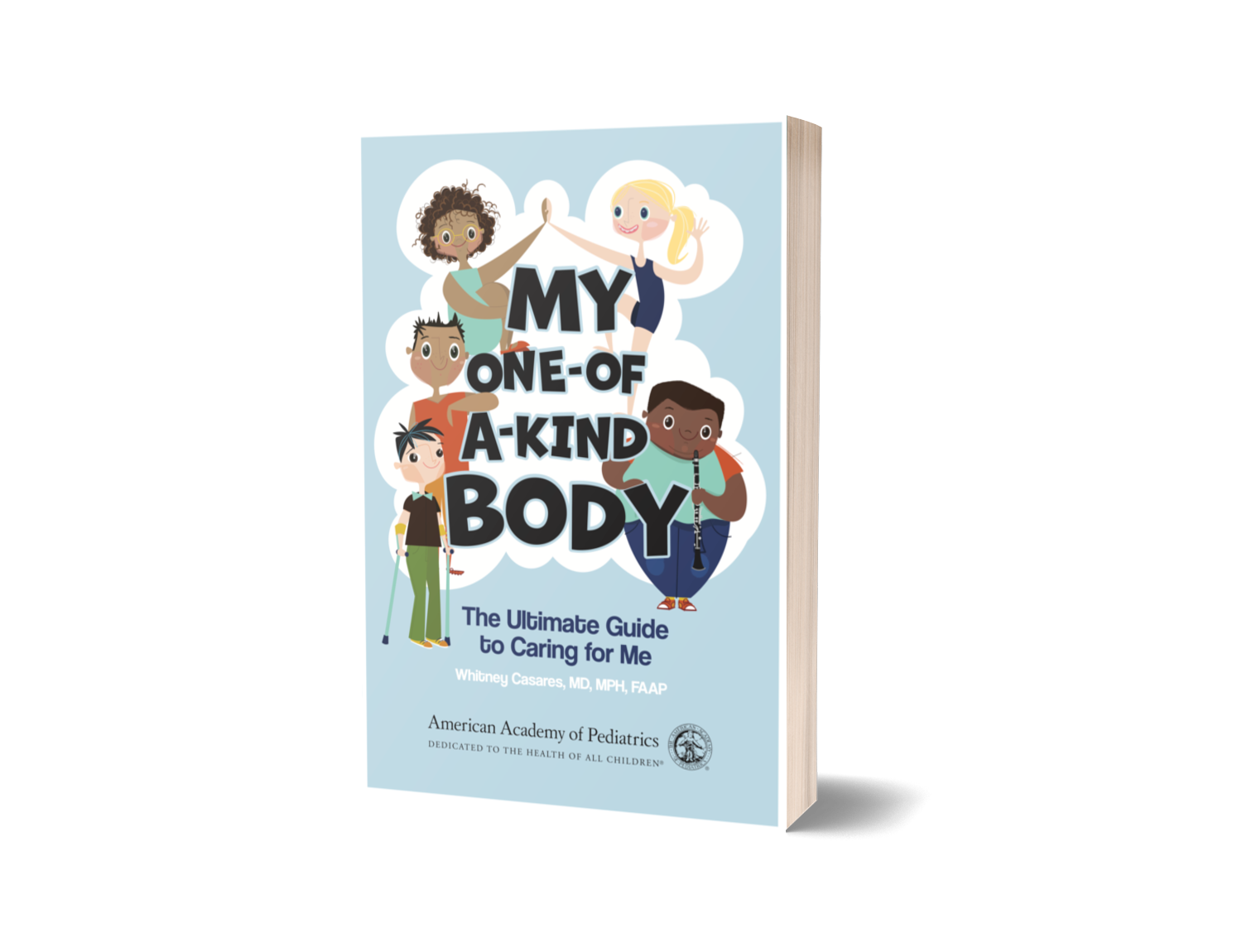
About the Episode: In this episode, Dr. Whitney sits down with Dr. Jay Gargus and Dave Justus from NeuroQure to discuss the power of early clarity when it comes to autism detection and why earlier intervention can fundamentally change outcomes for childre n and families. Dr. Gargus explains the science behind early behavioral therapies and why their impact goes far beyond short-term skill-building. Research shows that early, evidence-based interventions can lead to measurable, lifelong improvements in IQ, so cial skills, independence, and educational placement, often determining whether a child can thrive in mainstream education or requires ongoing specialized support. The conversation also tackles a critical and often overlooked issue: access. Dave Justus shares the personal motivation behind NeuroQure’s work and explains why the test is being launched at cost, with installment plans and employer subsidies, while the team works toward insurance coverage. The goal is to prevent families from losing precious years waiting for answers. Together, they emphasize a hopeful message for parents: families don’t need to wait for a future “silver bullet.” We already have therapies that work and getting kids connected to them earlier can change the course of a lifetime. In this episode, we discuss: Why early autism detection leads to lifelong changes—not just short-term gains What a 17-point IQ difference actually means for education, independence, and quality of life How early intervention can shift developmental trajectories as early as 6 months The science and validation behind current autism therapies Why NeuroQure is pricing testing at cost while pursuing insurance coverage How early clarity can reduce long-term strain on families, schools, and healthcare systems This episode is a powerful reminder that timing matters and that early access to answers can make an extraordinary difference for children and the families who love them. About Our Guest: Dr. Jay Gargus, MD, PhD is a physician-scientist and nationally recognized expert in neurodevelopmental disorders, with decades of experience researching the biological underpinnings of autism. His work has focused on translating well-established science into meaningful, real-world interventions that can improve lifelong outcomes for children. Dr. Gargus emphasizes that early, evidence-based therapies are already available—and that connecting families to them sooner can fundamentally change developmental trajectories. Dave Justus is a parent and the founder of NeuroQure, whose work is driven by personal experience navigating delayed autism diagnosis and intervention. Motivated by the belief that early clarity can spare families years of uncertainty, Dave is focused on expanding access to early testing through cost-based pricing and ongoing efforts to secure insurance coverage. His mission is simple but powerful: ensure families don’t have to wait for answers that could change everything. Want to Start Raising Body-Confident Kids Today? 📘 Order the Book Order your copy of My One-of-a-Kind Body 👉 www.raisingbodyconfidentkids.com/books 🎁 Claim Your Free Bonus When you order on our site, you’ll also get access to a FREE video mini-course with five bite-sized lessons for parents. In just 25 minutes, you’ll walk away with: Simple, script-style ways to respond when your kid says, “I hate my thighs” How to talk about health without weight talk What to do when your own inner critic shows up How to interrupt diet culture at home The first step to raising a body-confident kid, even if you didn’t grow up as one 📩 Subscribe to The Modern Mommy Doc Podcast for more episodes on parenting with confidence and clarity. Leave a review using the hashtag #ModernMommyDoc.
By Dr. Whitney November 13, 2025
Stop being so busy, and start being more present.
By Dr. Whitney November 5, 2025
Starting out right with solids doesn't have to be so scary.
By Dr. Whitney October 29, 2025
What if YOU are the one who needs to calm down first?

Welcome! Get the information you need to win at parenting without losing yourself.

LEARN MORE

My Kids' Book on Body Confidence is Finally Here!


Wish your partner would do more to lessen your mental load?


Want to make self-care a priority but not sure how to?


SIGN UP FOR SUSTAINABLE SELF-CARE. IT'S FREE. CLICK HERE


FRESH

ON THE PODCAST


By Dr. Whitney December 17, 2025
About the Episode: In this episode, Dr. Whitney sits down with Dr. Jay Gargus and Dave Justus from NeuroQure to discuss the power of early clarity when it comes to autism detection and why earlier intervention can fundamentally change outcomes for childre n and families. Dr. Gargus explains the science behind early behavioral therapies and why their impact goes far beyond short-term skill-building. Research shows that early, evidence-based interventions can lead to measurable, lifelong improvements in IQ, so cial skills, independence, and educational placement, often determining whether a child can thrive in mainstream education or requires ongoing specialized support. The conversation also tackles a critical and often overlooked issue: access. Dave Justus shares the personal motivation behind NeuroQure’s work and explains why the test is being launched at cost, with installment plans and employer subsidies, while the team works toward insurance coverage. The goal is to prevent families from losing precious years waiting for answers. Together, they emphasize a hopeful message for parents: families don’t need to wait for a future “silver bullet.” We already have therapies that work and getting kids connected to them earlier can change the course of a lifetime. In this episode, we discuss: Why early autism detection leads to lifelong changes—not just short-term gains What a 17-point IQ difference actually means for education, independence, and quality of life How early intervention can shift developmental trajectories as early as 6 months The science and validation behind current autism therapies Why NeuroQure is pricing testing at cost while pursuing insurance coverage How early clarity can reduce long-term strain on families, schools, and healthcare systems This episode is a powerful reminder that timing matters and that early access to answers can make an extraordinary difference for children and the families who love them. About Our Guest: Dr. Jay Gargus, MD, PhD is a physician-scientist and nationally recognized expert in neurodevelopmental disorders, with decades of experience researching the biological underpinnings of autism. His work has focused on translating well-established science into meaningful, real-world interventions that can improve lifelong outcomes for children. Dr. Gargus emphasizes that early, evidence-based therapies are already available—and that connecting families to them sooner can fundamentally change developmental trajectories. Dave Justus is a parent and the founder of NeuroQure, whose work is driven by personal experience navigating delayed autism diagnosis and intervention. Motivated by the belief that early clarity can spare families years of uncertainty, Dave is focused on expanding access to early testing through cost-based pricing and ongoing efforts to secure insurance coverage. His mission is simple but powerful: ensure families don’t have to wait for answers that could change everything. Want to Start Raising Body-Confident Kids Today? 📘 Order the Book Order your copy of My One-of-a-Kind Body 👉 www.raisingbodyconfidentkids.com/books 🎁 Claim Your Free Bonus When you order on our site, you’ll also get access to a FREE video mini-course with five bite-sized lessons for parents. In just 25 minutes, you’ll walk away with: Simple, script-style ways to respond when your kid says, “I hate my thighs” How to talk about health without weight talk What to do when your own inner critic shows up How to interrupt diet culture at home The first step to raising a body-confident kid, even if you didn’t grow up as one 📩 Subscribe to The Modern Mommy Doc Podcast for more episodes on parenting with confidence and clarity. Leave a review using the hashtag #ModernMommyDoc.
By Dr. Whitney November 13, 2025
Stop being so busy, and start being more present.