MMD BLOG


CATEGORY:

PARENTING + KIDS

RAISING DAUGHTERS | WHY I'M NOT AFRAID OF A LITTLE BIT OF PINK

 Modern Mommy Doc


PUBLICATION DATE:

December 23, 2017

RAISING DAUGHTERS | WHY I'M NOT AFRAID OF A LITTLE BIT OF PINK

 Modern Mommy Doc

CATEGORY: PARENTING + KIDS

Apparently, there is a shimmering mermaid living in my house. She sings “We Are The Daughters of Triton” at the top of her lungs. She pretends to scatter shells for the merfolk in her kingdom on the pool steps while we’re on vacation. And she even picked out a blue mermaid swimsuit, complete with scales and a jeweled neckline, for our trip to Hawaii. Raising daughters is always an adventure (for help with the hard parts, click here for a free guide to toddler tantrums).


When my daughter is not playing sea kingdom, she is almost always in full princess gear. We do have a rule that no costumes are allowed for school, music class or soccer (it’s just too distracting) but, otherwise, it’s on. To say she is usually in pink or purple or some other variation on that theme would be a huge understatement- the girl lives for girlie.


And, of course, you know how it goes- once the word gets out that there’s a girl interested in princess stuff in the house, all future gifts from every relative and friend tend to fit that theme. At least I think that’s how I ended up with 20 dress-up costumes hanging neatly in my playroom. My little royal wants to wear her crown and necklace whether we’re headed to Target or to the airport- it doesn’t really matter the destination.


The other day, at the coffee shop in a full-on Snow White outfit my eldest picked out herself, I watched the reactions of two patrons toward her. One rolled her eyes and snarked, the other grinned and gave me a knowing wink. I get the gut response of both onlookers: the desire to not let our daughters’ accomplishments stop at being saved by Prince Charming, the fact that kids have minds of their own and often have a very specific wardrobe plan from the moment they wake up, the reality that most parents learn to roll with it sooner or later. They clearly haven't raised daughters.


But there is a limit. When I think about how far is too far when it comes to the whole princess thing, it really boils down to one thing. What is my child learning as she plays? My goal (the same goal I would have if my house was filled with all boys) is to support and encourage my children to fall in love with learning and to embrace imaginative play. And that means encouraging them to fall in love with learning whatever THEY are the most excited about. If they’re into superheroes, awesome. Explorers? Sweet. Math and science? Works for me. Far be it from me to make decisions for my littles as to who they will get excited about imagining themselves to be.


Let them wear pink, I say.


It’s going take more than an outfit choice to determine my kids’ futures. I feel confident I’m still leading them down a path of empowerment. That’s because, while I’m easy on the wardrobe choices, I’m a stickler when it comes to these things:


1. I intentionally provide a variety of storyline exposures in book and screen time form.


Our favorite books right now are Iggy Peck, Architect and Rosie Revere, Engineer. I also love Good Night Stories for Rebel Girls and the series Ordinary People Change The World- kid-friendly, inspiring true stories of male and female heroes who fight against all odds (and stereotypes) to accomplish their dreams. Olivia and the Fairy Princesses is my all-time favorite, super silly book about caring more about choosing your own path than about fitting onto someone else’s.


2. I prioritize real-life interactions for my kids with women and men who are pursuing their professional passions and helping others.


Chefs, photographers, lawyers, doctors, artists- I make sure my kids see that being successful means you love what you do and choose the profession that makes you satisfied- not the one that satisfies someone else’s expectations of you.


3. I try to limit the grossly stereotyped stories we do see or listen to.


When we come across those books or shows, we try to talk through the gender roles that come up and we (usually in a silly way) question the assumptions those shows make. I remember listening to my husband read my eldest a bedtime story about Rapunzel last year, shifting the narrative slyly for her. “So why do you think The Prince wanted to go see Rapunzel? I think it’s cause she is SO good at Algebra- he thinks that’s really neat.” He probably knew I could hear him downstairs but, hey, I’ll take it!


4. I make it a point to develop girl AND boy relationships for my daughters.


Of course, I love my little girl’s girlfriends, but we mix it up. Diversity in gender, in ethnicity, in religion, in family make-up- the more my girls can appreciate the preferences and rituals of others, the better they can define their own as they mature. In the same vein, we talk about and demonstrate shared household and work responsibilities between my husband and I. My daughter knows I work full-time and run a website. “Mommy, how many visitors did you get this week?” She asks me all the time, then gives me a huge high-five as I tell her, “We’re killin’ it!”


It’s going to take way more than some pink gowns and a pair of fairy wings to pigeon-hole my babies. I’m focusing less on their chosen attire and more on their overall exposure and my overall messaging. I know they’ll end up whoever they’re supposed to be - princess, pirate or both.



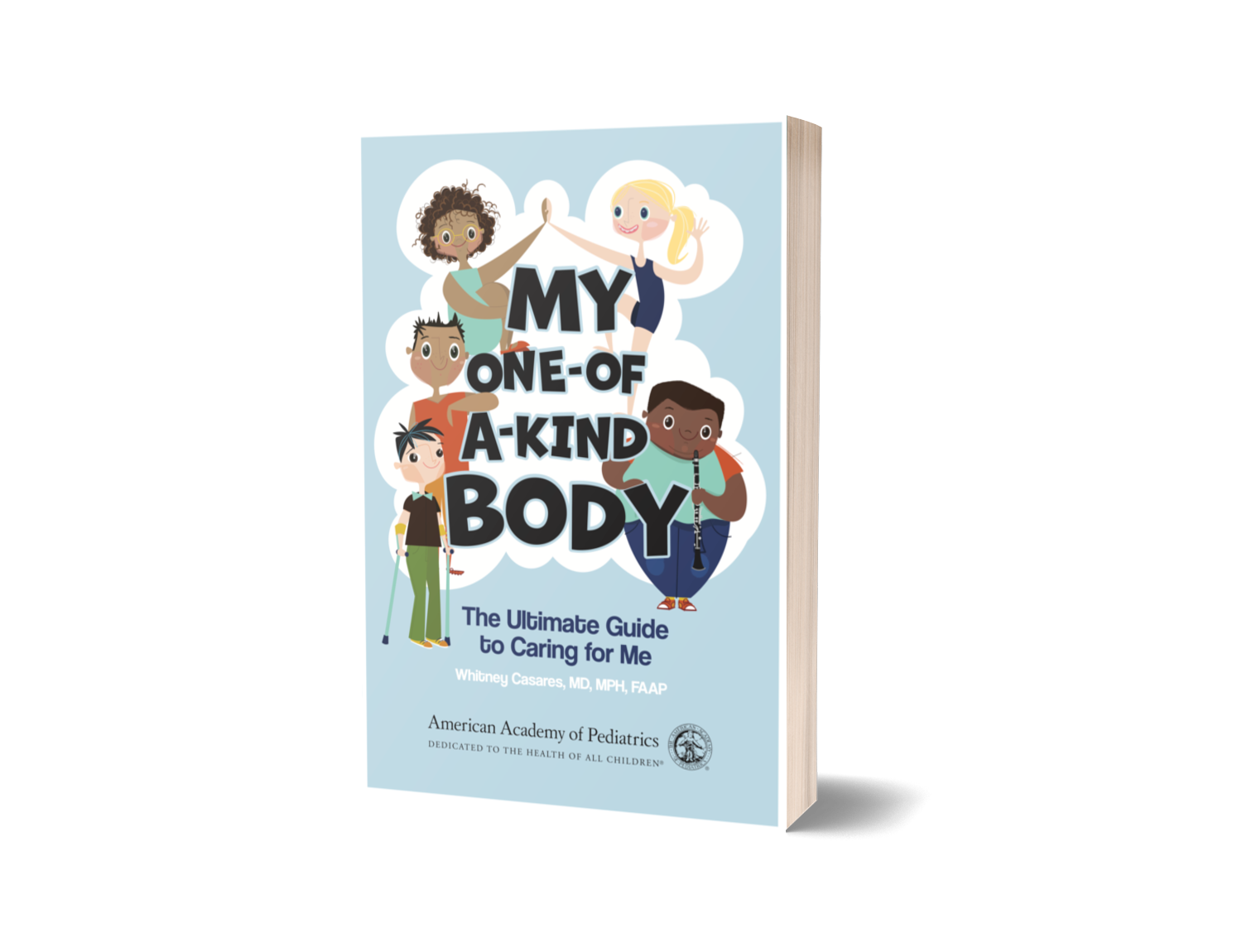
Raising Body-Confident Kids Starts at the Doctor's Office!

START NOW
By Dr. Whitney December 17, 2025
About the Episode: In this episode, Dr. Whitney sits down with Dr. Jay Gargus and Dave Justus from NeuroQure to discuss the power of early clarity when it comes to autism detection and why earlier intervention can fundamentally change outcomes for childre n and families. Dr. Gargus explains the science behind early behavioral therapies and why their impact goes far beyond short-term skill-building. Research shows that early, evidence-based interventions can lead to measurable, lifelong improvements in IQ, so cial skills, independence, and educational placement, often determining whether a child can thrive in mainstream education or requires ongoing specialized support. The conversation also tackles a critical and often overlooked issue: access. Dave Justus shares the personal motivation behind NeuroQure’s work and explains why the test is being launched at cost, with installment plans and employer subsidies, while the team works toward insurance coverage. The goal is to prevent families from losing precious years waiting for answers. Together, they emphasize a hopeful message for parents: families don’t need to wait for a future “silver bullet.” We already have therapies that work and getting kids connected to them earlier can change the course of a lifetime. In this episode, we discuss: Why early autism detection leads to lifelong changes—not just short-term gains What a 17-point IQ difference actually means for education, independence, and quality of life How early intervention can shift developmental trajectories as early as 6 months The science and validation behind current autism therapies Why NeuroQure is pricing testing at cost while pursuing insurance coverage How early clarity can reduce long-term strain on families, schools, and healthcare systems This episode is a powerful reminder that timing matters and that early access to answers can make an extraordinary difference for children and the families who love them. About Our Guest: Dr. Jay Gargus, MD, PhD is a physician-scientist and nationally recognized expert in neurodevelopmental disorders, with decades of experience researching the biological underpinnings of autism. His work has focused on translating well-established science into meaningful, real-world interventions that can improve lifelong outcomes for children. Dr. Gargus emphasizes that early, evidence-based therapies are already available—and that connecting families to them sooner can fundamentally change developmental trajectories. Dave Justus is a parent and the founder of NeuroQure, whose work is driven by personal experience navigating delayed autism diagnosis and intervention. Motivated by the belief that early clarity can spare families years of uncertainty, Dave is focused on expanding access to early testing through cost-based pricing and ongoing efforts to secure insurance coverage. His mission is simple but powerful: ensure families don’t have to wait for answers that could change everything. Want to Start Raising Body-Confident Kids Today? 📘 Order the Book Order your copy of My One-of-a-Kind Body 👉 www.raisingbodyconfidentkids.com/books 🎁 Claim Your Free Bonus When you order on our site, you’ll also get access to a FREE video mini-course with five bite-sized lessons for parents. In just 25 minutes, you’ll walk away with: Simple, script-style ways to respond when your kid says, “I hate my thighs” How to talk about health without weight talk What to do when your own inner critic shows up How to interrupt diet culture at home The first step to raising a body-confident kid, even if you didn’t grow up as one 📩 Subscribe to The Modern Mommy Doc Podcast for more episodes on parenting with confidence and clarity. Leave a review using the hashtag #ModernMommyDoc.
By Dr. Whitney November 13, 2025
Stop being so busy, and start being more present.
By Dr. Whitney November 5, 2025
Starting out right with solids doesn't have to be so scary.
By Dr. Whitney October 29, 2025
What if YOU are the one who needs to calm down first?

Welcome! Get the information you need to win at parenting without losing yourself.

LEARN MORE

My Kids' Book on Body Confidence is Finally Here!


Wish your partner would do more to lessen your mental load?


Want to make self-care a priority but not sure how to?


SIGN UP FOR SUSTAINABLE SELF-CARE. IT'S FREE. CLICK HERE


FRESH

ON THE PODCAST


By Dr. Whitney December 17, 2025
About the Episode: In this episode, Dr. Whitney sits down with Dr. Jay Gargus and Dave Justus from NeuroQure to discuss the power of early clarity when it comes to autism detection and why earlier intervention can fundamentally change outcomes for childre n and families. Dr. Gargus explains the science behind early behavioral therapies and why their impact goes far beyond short-term skill-building. Research shows that early, evidence-based interventions can lead to measurable, lifelong improvements in IQ, so cial skills, independence, and educational placement, often determining whether a child can thrive in mainstream education or requires ongoing specialized support. The conversation also tackles a critical and often overlooked issue: access. Dave Justus shares the personal motivation behind NeuroQure’s work and explains why the test is being launched at cost, with installment plans and employer subsidies, while the team works toward insurance coverage. The goal is to prevent families from losing precious years waiting for answers. Together, they emphasize a hopeful message for parents: families don’t need to wait for a future “silver bullet.” We already have therapies that work and getting kids connected to them earlier can change the course of a lifetime. In this episode, we discuss: Why early autism detection leads to lifelong changes—not just short-term gains What a 17-point IQ difference actually means for education, independence, and quality of life How early intervention can shift developmental trajectories as early as 6 months The science and validation behind current autism therapies Why NeuroQure is pricing testing at cost while pursuing insurance coverage How early clarity can reduce long-term strain on families, schools, and healthcare systems This episode is a powerful reminder that timing matters and that early access to answers can make an extraordinary difference for children and the families who love them. About Our Guest: Dr. Jay Gargus, MD, PhD is a physician-scientist and nationally recognized expert in neurodevelopmental disorders, with decades of experience researching the biological underpinnings of autism. His work has focused on translating well-established science into meaningful, real-world interventions that can improve lifelong outcomes for children. Dr. Gargus emphasizes that early, evidence-based therapies are already available—and that connecting families to them sooner can fundamentally change developmental trajectories. Dave Justus is a parent and the founder of NeuroQure, whose work is driven by personal experience navigating delayed autism diagnosis and intervention. Motivated by the belief that early clarity can spare families years of uncertainty, Dave is focused on expanding access to early testing through cost-based pricing and ongoing efforts to secure insurance coverage. His mission is simple but powerful: ensure families don’t have to wait for answers that could change everything. Want to Start Raising Body-Confident Kids Today? 📘 Order the Book Order your copy of My One-of-a-Kind Body 👉 www.raisingbodyconfidentkids.com/books 🎁 Claim Your Free Bonus When you order on our site, you’ll also get access to a FREE video mini-course with five bite-sized lessons for parents. In just 25 minutes, you’ll walk away with: Simple, script-style ways to respond when your kid says, “I hate my thighs” How to talk about health without weight talk What to do when your own inner critic shows up How to interrupt diet culture at home The first step to raising a body-confident kid, even if you didn’t grow up as one 📩 Subscribe to The Modern Mommy Doc Podcast for more episodes on parenting with confidence and clarity. Leave a review using the hashtag #ModernMommyDoc.
By Dr. Whitney November 13, 2025
Stop being so busy, and start being more present.