MMD BLOG


CATEGORY:

PODCAST EPISODES | #128

HOW TO REGULATE YOUR CHILDREN’S EMOTIONS BY REGULATING YOURS

 Modern Mommy Doc


PUBLICATION DATE:

February 16, 2023

HOW TO REGULATE YOUR CHILDREN’S EMOTIONS BY REGULATING YOURS

 Modern Mommy Doc

CATEGORY: PODCAST EPISODES | #128

Dr. Whitney chats with Seed and Sew CEO, Alyssa Blask Campbell, about how as parents, we can’t react logically and appropriately to our children or at work when we’re already dysregulated. They chat through how to regulate your own emotions, so that you can help your child regulate theirs. 


Main Points:


Dr. Whitney: Welcome! Tell us about your company and your story about why you created it.

Alyssa: I have always worked in Early Childhood Education. I have my Masters in Early Childhood, I’ve worked in kindergarten all the way down to infant. I was a nanny, mom, and preschool teacher, so I have been steeped in Early Childhood Ed. I was working at a school where we could do research and a colleague of mine and I started to dive into what we were doing differently at our school and why we were seeing different results. We were asking ourselves how could Early Childhood Ed look different? We ended up creating the Collaborative Emotional Processing Method (CEP) and researching it across the US. So Seed is really bringing the CEP Method to everyone. Seed has 5 components: self awareness, self-care (taking care of our nervous system), scientific knowledge (what’s happening neurologically for us or our kids), uncovering implicit bias (undoing our social programming), and adult-child interactions (what we actually do in the moments with our kids). That last one is really what people come for but they end up staying for themselves.


Dr. Whitney: As a pediatrician, that’s what people come to me for. What do I do with my kid? How do I get them to not do X,Y, or Z or how do I get them to do X,Y, or Z? And one of the reasons I started Modern Mommy Doc was because I realized that, yes, it matters what we’re doing for our kids. But we also have to take care of ourselves if we want to show up for them at our best. Let’s go back to when you started your company. What was the ah-ha moment when you realized that you were doing something different? What were other early childhood education companies doing?


Alyssa: So much of the curriculums are focused on the kids and their behaviors. How we can get them to be pro-social beings and thrive in society. What we noticed was that at our school, so much of our focus was on us as educators, knowing that if we aren’t regulated, we aren’t able to show up and help these kids like we’d been trained and loved to do. And then there’s the emotional side. How are we able to teach these kids self-awareness skills and then social regulation skills, so that they are able to access social skills like empathy? Because those are secondary.


Dr. Whitney: What I hear you saying is that you’re a Master’s level teacher. You have all the training. You know what to do for children in those moments. But none of that matters if you can’t regulate yourself in that same moment.


Alyssa: We’re looking at shifting the adult experience of children’s emotions, rather than trying to change the child. When your child is doing something that is inconvenient for you, your initial feelings are valid. What we’re trying to do is work on the pause between your initial reaction and your secondary response.


Dr. Whitney: You said Seed has 5 components. Talk about that self-care piece. What does it really mean to take care of yourself as a parent?


Alyssa: For us, it’s really about your nervous system, so it’s going to be different for every person. I’m a person who really benefits from having time to do the work that I want. So I struggle when my son is home because I can’t do that. We all have basic needs that regulate our nervous system: food, water, breaks from work, movement. So you have to ask yourself what regulates your nervous system proactively. We wouldn’t wait till our kids were hangry to give them food. Same thing for us. We need to think through our own nervous system and what pours in to make us feel more balanced. There are things that naturally drain us–what fill us back up?


Dr. Whitney: I think we all need to realize how individual we are. We all have unique needs. And so sometimes that feels high maintenance or being extra. But if we don’t recognize what we need before we need it, we’re going to be in that state of being depleted all the time.


Alyssa: A lot of us grew up in homes where asking for help was not how we were shown or received love. So we have a hard time stating the fact that we have needs. So we ask ourselves if we’ll be worthy of love if we need help? Am I loveable when I have needs? And I think two things about that. One, we need to acknowledge that part of our childhood that makes the way we currently feel make sense. And two, we’re modeling for our kids the way that we take care of ourselves, so that they can do the same for themselves.


Dr. Whitney: And it’s always going to give us opportunities to model making things right with our kids or spouse. Because we definitely are going to mess up and become dysregulated and act out. How does Seed talk about that? 


Alyssa: The goal isn’t regulation all the time. I wish that’s something that was talked about more. The goal of practicing self care or learning tools of regulation isn’t to stay regulated all the time. Otherwise you wouldn't feel things like excitement, which is a sign of dysregulation. The goal is to create a safe space and model what it looks like to feel your emotions and then come back into regulation. We have different colored zones that we talk about that match different ways you’re feeling. So we want to hover between blue, green, and yellow all day, avoiding red when you’re totally out of control. When you're self-aware and know what to do when you’re feeling dysregulated, then you have enough left in your battery to bring yourself back down.


Dr. Whitney: What I love about your message is that it’s not black and white. It leaves so much for humanity. Curriculum in schools is so much more binary. How are you getting this into schools or into parents' hands?


Alyssa: We have certifications you can go through to learn the CEP Method that teaches you all 5 components and teachers have ongoing support through that, so they can lean on us and other teachers. You can go to our website to find Seed Certified schools near you and all the families at those schools have access to our Tiny Humans Big Emotions class so they can really practice it at home. If you’re looking on the website and there isn’t a certified school near you, you can reach out to us at support@seedandsew.com and we can reach out to other schools in your area to try to make that happen for you. We have a podcast, Voices of Your Village, and a really active instagram community. Our flagship program is called ReParenting, which is the “us” side of the equation, plus our Tiny Humans Big Emotions course and we sell those as a bundle because we have seen how important it is for those to go together. If you head to our website and click on the parents tab, you’ll see all of our resources that we have there.

Raising Body-Confident Kids Starts at the Doctor's Office!

START NOW
By Dr. Whitney January 29, 2026
Raising kids well starts with understanding regulation.
By Dr. Whitney December 17, 2025
About the Episode: In this episode, Dr. Whitney sits down with Dr. Jay Gargus and Dave Justus from NeuroQure to discuss the power of early clarity when it comes to autism detection and why earlier intervention can fundamentally change outcomes for childre n and families. Dr. Gargus explains the science behind early behavioral therapies and why their impact goes far beyond short-term skill-building. Research shows that early, evidence-based interventions can lead to measurable, lifelong improvements in IQ, so cial skills, independence, and educational placement, often determining whether a child can thrive in mainstream education or requires ongoing specialized support. The conversation also tackles a critical and often overlooked issue: access. Dave Justus shares the personal motivation behind NeuroQure’s work and explains why the test is being launched at cost, with installment plans and employer subsidies, while the team works toward insurance coverage. The goal is to prevent families from losing precious years waiting for answers. Together, they emphasize a hopeful message for parents: families don’t need to wait for a future “silver bullet.” We already have therapies that work and getting kids connected to them earlier can change the course of a lifetime. In this episode, we discuss: Why early autism detection leads to lifelong changes—not just short-term gains What a 17-point IQ difference actually means for education, independence, and quality of life How early intervention can shift developmental trajectories as early as 6 months The science and validation behind current autism therapies Why NeuroQure is pricing testing at cost while pursuing insurance coverage How early clarity can reduce long-term strain on families, schools, and healthcare systems This episode is a powerful reminder that timing matters and that early access to answers can make an extraordinary difference for children and the families who love them. About Our Guest: Dr. Jay Gargus, MD, PhD is a physician-scientist and nationally recognized expert in neurodevelopmental disorders, with decades of experience researching the biological underpinnings of autism. His work has focused on translating well-established science into meaningful, real-world interventions that can improve lifelong outcomes for children. Dr. Gargus emphasizes that early, evidence-based therapies are already available—and that connecting families to them sooner can fundamentally change developmental trajectories. Dave Justus is a parent and the founder of NeuroQure, whose work is driven by personal experience navigating delayed autism diagnosis and intervention. Motivated by the belief that early clarity can spare families years of uncertainty, Dave is focused on expanding access to early testing through cost-based pricing and ongoing efforts to secure insurance coverage. His mission is simple but powerful: ensure families don’t have to wait for answers that could change everything. Want to Start Raising Body-Confident Kids Today? 📘 Order the Book Order your copy of My One-of-a-Kind Body 👉 www.raisingbodyconfidentkids.com/books 🎁 Claim Your Free Bonus When you order on our site, you’ll also get access to a FREE video mini-course with five bite-sized lessons for parents. In just 25 minutes, you’ll walk away with: Simple, script-style ways to respond when your kid says, “I hate my thighs” How to talk about health without weight talk What to do when your own inner critic shows up How to interrupt diet culture at home The first step to raising a body-confident kid, even if you didn’t grow up as one 📩 Subscribe to The Modern Mommy Doc Podcast for more episodes on parenting with confidence and clarity. Leave a review using the hashtag #ModernMommyDoc.
By Dr. Whitney November 13, 2025
Stop being so busy, and start being more present.
By Dr. Whitney November 5, 2025
Starting out right with solids doesn't have to be so scary.

Welcome! Get the information you need to win at parenting without losing yourself.

LEARN MORE

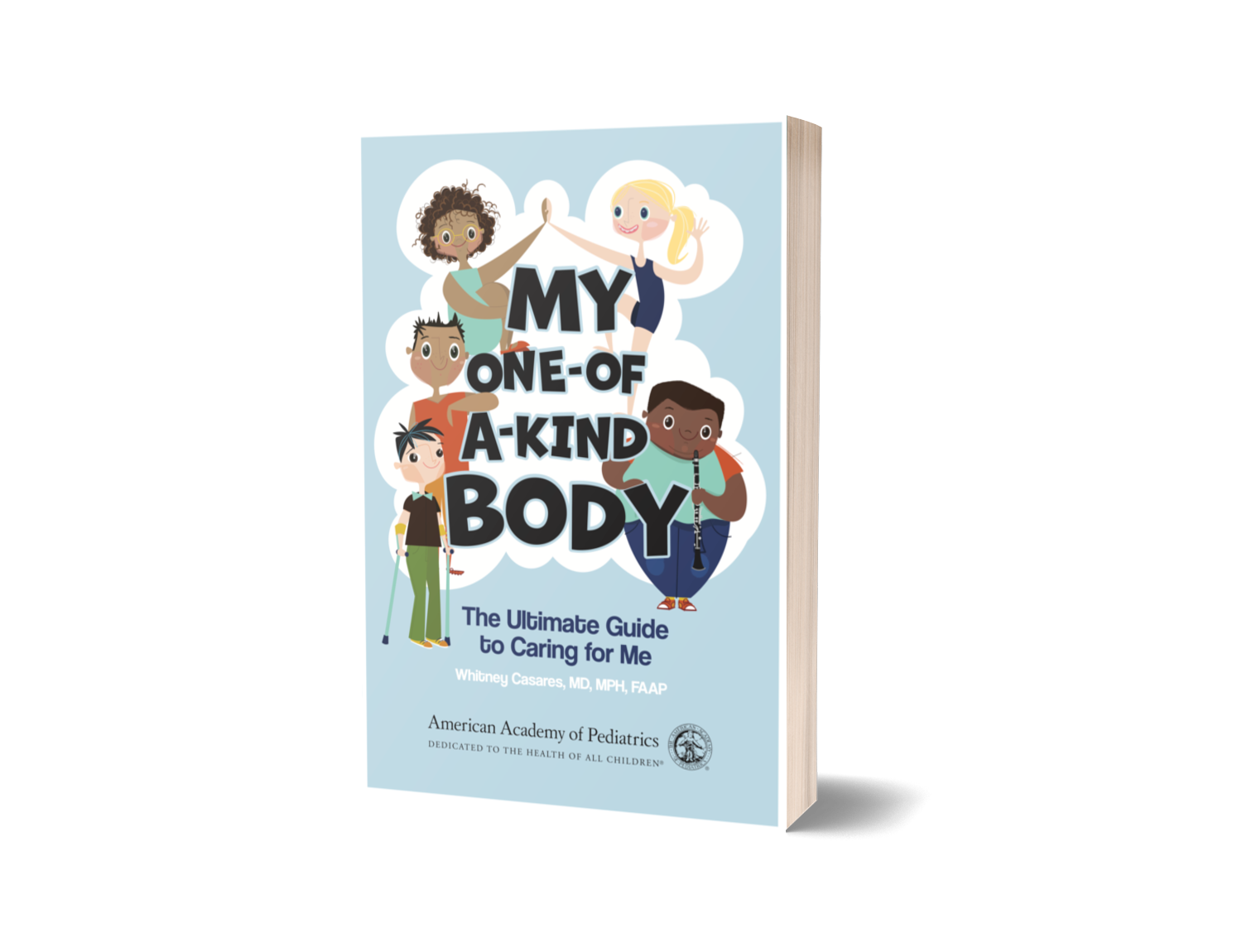
My Kids' Book on Body Confidence is Finally Here!


Wish your partner would do more to lessen your mental load?


Want to make self-care a priority but not sure how to?


SIGN UP FOR SUSTAINABLE SELF-CARE. IT'S FREE. CLICK HERE


FRESH

ON THE PODCAST


By Dr. Whitney January 29, 2026
Raising kids well starts with understanding regulation.
By Dr. Whitney December 17, 2025
About the Episode: In this episode, Dr. Whitney sits down with Dr. Jay Gargus and Dave Justus from NeuroQure to discuss the power of early clarity when it comes to autism detection and why earlier intervention can fundamentally change outcomes for childre n and families. Dr. Gargus explains the science behind early behavioral therapies and why their impact goes far beyond short-term skill-building. Research shows that early, evidence-based interventions can lead to measurable, lifelong improvements in IQ, so cial skills, independence, and educational placement, often determining whether a child can thrive in mainstream education or requires ongoing specialized support. The conversation also tackles a critical and often overlooked issue: access. Dave Justus shares the personal motivation behind NeuroQure’s work and explains why the test is being launched at cost, with installment plans and employer subsidies, while the team works toward insurance coverage. The goal is to prevent families from losing precious years waiting for answers. Together, they emphasize a hopeful message for parents: families don’t need to wait for a future “silver bullet.” We already have therapies that work and getting kids connected to them earlier can change the course of a lifetime. In this episode, we discuss: Why early autism detection leads to lifelong changes—not just short-term gains What a 17-point IQ difference actually means for education, independence, and quality of life How early intervention can shift developmental trajectories as early as 6 months The science and validation behind current autism therapies Why NeuroQure is pricing testing at cost while pursuing insurance coverage How early clarity can reduce long-term strain on families, schools, and healthcare systems This episode is a powerful reminder that timing matters and that early access to answers can make an extraordinary difference for children and the families who love them. About Our Guest: Dr. Jay Gargus, MD, PhD is a physician-scientist and nationally recognized expert in neurodevelopmental disorders, with decades of experience researching the biological underpinnings of autism. His work has focused on translating well-established science into meaningful, real-world interventions that can improve lifelong outcomes for children. Dr. Gargus emphasizes that early, evidence-based therapies are already available—and that connecting families to them sooner can fundamentally change developmental trajectories. Dave Justus is a parent and the founder of NeuroQure, whose work is driven by personal experience navigating delayed autism diagnosis and intervention. Motivated by the belief that early clarity can spare families years of uncertainty, Dave is focused on expanding access to early testing through cost-based pricing and ongoing efforts to secure insurance coverage. His mission is simple but powerful: ensure families don’t have to wait for answers that could change everything. Want to Start Raising Body-Confident Kids Today? 📘 Order the Book Order your copy of My One-of-a-Kind Body 👉 www.raisingbodyconfidentkids.com/books 🎁 Claim Your Free Bonus When you order on our site, you’ll also get access to a FREE video mini-course with five bite-sized lessons for parents. In just 25 minutes, you’ll walk away with: Simple, script-style ways to respond when your kid says, “I hate my thighs” How to talk about health without weight talk What to do when your own inner critic shows up How to interrupt diet culture at home The first step to raising a body-confident kid, even if you didn’t grow up as one 📩 Subscribe to The Modern Mommy Doc Podcast for more episodes on parenting with confidence and clarity. Leave a review using the hashtag #ModernMommyDoc.