MMD BLOG


CATEGORY:

HOLIDAYS + SELF-CARE

HOW TO MAKE VALENTINE'S DAY NOT SUCK

 Modern Mommy Doc


PUBLICATION DATE:

February 14, 2023

HOW TO MAKE VALENTINE'S DAY NOT SUCK

 Modern Mommy Doc

CATEGORY: HOLIDAYS + SELF-CARE

February 14th. The Day for Lovers. Valentine’s Day. 


Okay that second one made me throw up a little bit. Whenever I hear that word, I just picture Jennifer Grey in that scene in Dirty Dancing and it’s just weird.


Regardless of what you call it, it’s here.


And I think most people are pretty split on their feelings about the day. People either really get into it, don’t care about it at all, or there’s the third category of people (and I’d venture to say that most of these are women) that act like they don’t care about it, but get their feelings hurt each year when it didn’t go like they actually pictured it.


If you and your partner are both on the same page, giving each other the same level of thoughtfulness when it comes to gifts (one of you didn’t go kinky lingerie and one got a set of chip clips) AND are on the same level of romance when it comes to sex, then you’re the magical unicorn of couples and we all tip our hats to you.


OR if you and your partner BOTH don’t REEEEEALLY care (not that fake indifference) about the day, then enjoy your very normal day on Tuesday.


More than likely, though, there’s a discrepancy between how you and your partner feel. One has high hopes and expectations, one doesn’t even know the holiday is coming up. One dreams of breakfast in bed, while one wants a quick handy before the kids get up.


I realize that’s taboo to say out loud, but I’m just being real. Ha!


If you want to reclaim Valentine’s Day and make it a day that is actually enjoyable, I’ve got three tips for you.


Clear communication with your spouse or partner. Once again, this is my go-to, because it can make everything so much easier on everyone. If when you were dating, you told your boyfriend that you don’t really get into Valentine’s Day, because that’s what you thought he wanted to hear, but then when you got married he didn’t flip a switch and automatically shower you with roses, then that’s on you. #sorrynotsorry 


Most of the expectations we put on our partners are ones that they’re completely unaware of, so it’s really unfair for us to assume they’ll meet them. If you actually love all the romantics of the day, don’t tell them that you’re just happy with having dinner together. Because that’s probably something you do very often, and you’re just asking for disappointment.


Same thing goes for sexy time. Clear communication will be the real winner here. It’s unfair for moms to work all day long (in or out of the home), cook dinner when they get home, do all the homework help, do bathtime, get the kids down, and then to have to snap her fingers and all of a sudden be super turned on. But if you have the conversation to say that, yes, you’re really excited to connect with your partner after the kids go to bed, but what would really help you be able to relax so you could get in the mood is for your partner to take X, Y, and Z off your plate. 


Trust me, they’ll be doing those dishes with a happy heart 🤣


Remove the pressure from the day.

Nothing is a bigger libido killer than unmet expectations and heaping amounts of pressure. If you both have really packed schedules that day, make plans to connect during the weekend. If one of you (genuinely) has a headache, schedule in some afternoon delight the next day.


Don’t let the date on the calendar dictate the way you feel in your relationship.


But, again, make sure any and all expectations of future together time are very clearly communicated from both sides. 


Even for gifts, allow both of you the freedom to give gifts that make the other person feel special and appreciated–it doesn’t have to be a huge romantic gesture. The goal is for each of you to feel loved.


Be your own Valentine.

This is in no way encouraging you to be passive aggressive, so stay with me on this one. Think about what would make you feel amazing that day. Fresh flowers? A pedicure? An orgasm? 


Go buy yourself flowers and have them out.

If your partner asks, you don’t need to respond with, “I figured I wasn’t getting any from anyone else, so I got some,” Instead, you can say, “Don’t they look pretty? I saw them at the store and they made me happy.” 


Go get a pedicure
because it relaxes you and makes you feel beautiful. And I’m sure your husband won’t be sad when your soft feet rub up on him later.


Plus, both of these are helpful hints for them the next year!


Break out the vibrator earlier that day.

I’m not saying anything hidden from your partner, but a frisky text of, “There’s something about today that just gets me going. Thought I’d start the fun early,” reeeeeally sets the tone for the day. You get to be in charge of your pleasure, but you’re inviting them into your moment, and then later on, you’ll be a little bit more open if Valentine’s Day actually means that your jaw hurts the next day (wink wink). 


Valentine’s Day can be REALLY fun, but only if you relax and focus on making both you and your partner feel loved and cared for. What would it mean to shift your perspective with a new attitude? What would your day look like?



Raising Body-Confident Kids Starts at the Doctor's Office!

START NOW
By Modern Mommy Doc • October 9, 2026
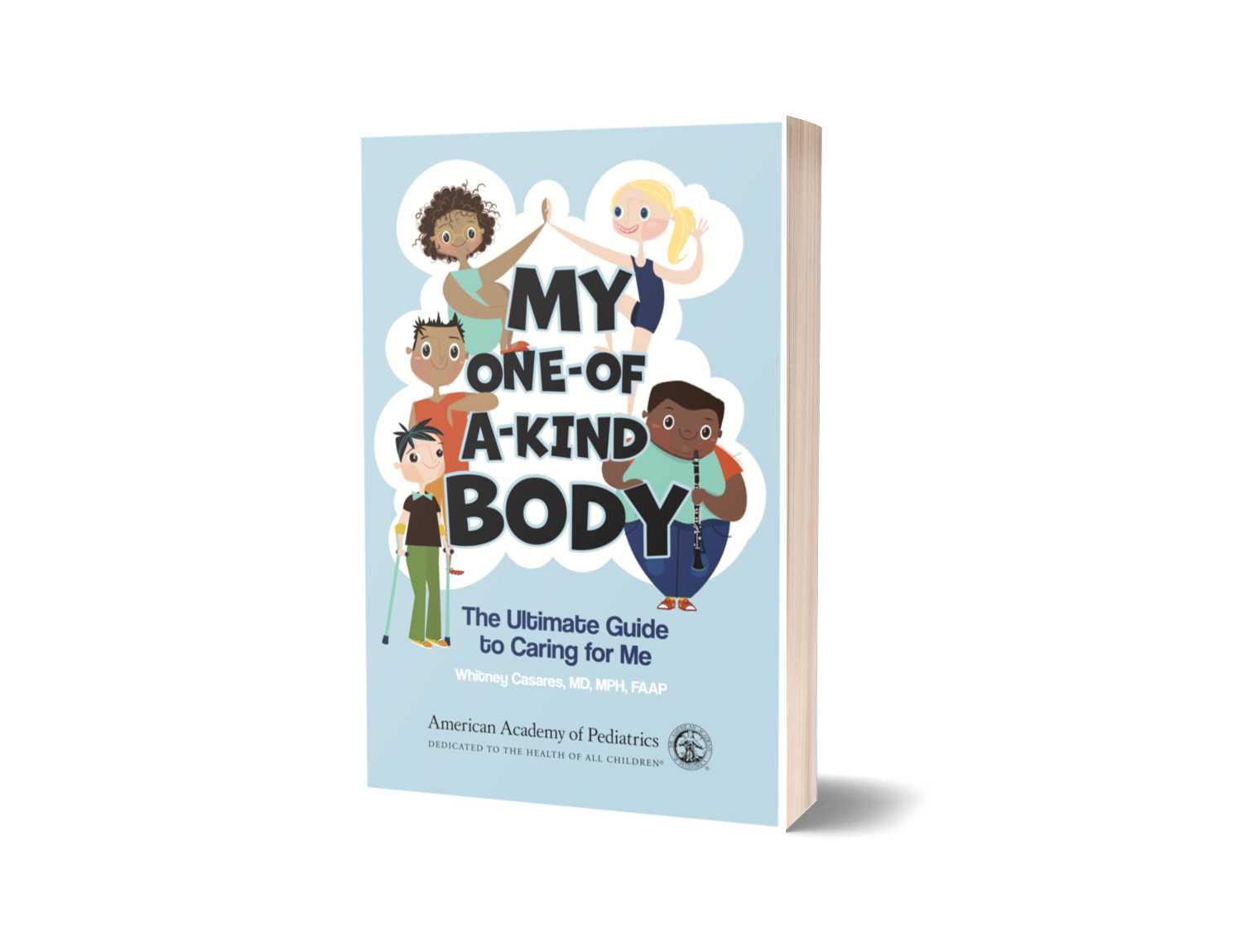
About the Episode: There’s so much parenting advice out there, and most of it doesn’t matter nearly as much as the internet wants you to think. (Seed oils? We have bigger fish to fry.) In this solo episode, Dr. Whitney gets back to basics and shares the six evidence-based parenting principles she focuses on as a pediatrician, the ones she dug into with a leading child development researcher. She also shares how these play out in real life as a mom of two neurodivergent kids, because guidance only helps if it actually fits your family. Key takeaways: Be sensitive and responsive. Simple practices like mirroring your child’s emotions and “serve and return” interactions build a loving, trusting foundation. Dr. Whitney shares how a Halloween decorating session turned into a deep conversation about religion once she slowed down and got curious. Meet kids where they are, especially at their worst. Drawing on Tina Payne Bryson, co-author of The Whole-Brain Child , Dr. Whitney explains that soothing a meltdown isn’t giving in. It’s letting your child know they’re not alone in a big feeling. Model self-regulation, and repair when you lose it. Self-regulation predicts academic success better than IQ. The goal isn’t staying calm all the time, it’s understanding why you got dysregulated, coming back to baseline, and offering yourself some self-compassion. Set limits for your kids and yourself. Every child’s needs are different (screen time affects Dr. Whitney’s two daughters very differently), but all kids need limits, and so do parents. Taking time for yourself models something healthy. Aim for authoritative, not permissive. High expectations paired with warmth and grace is the sweet spot. “Gentle parenting” can blur into permissiveness, which research shows is as harmful as authoritarian parenting. Protect unstructured time. Kids need boredom and free play to become self-directed. For ADHD and autistic kids, Dr. Whitney recommends offering a few options and letting kids choose. Support internal motivation. Using a “mirrors facing outward” image from her own therapist, Dr. Whitney explains why we want kids to trust their own instincts rather than constantly look outward for approval. Want to Start Raising Body-Confident Kids Today? 📘 Order the Books Raising Body-Confident Kids If you've ever caught yourself saying something to your kid about their body that sounded exactly like what your mother said to you, this book is for you. Raising Body-Confident Kids is a research-backed, judgment-free guide for parents who want to break the cycle of diet culture and body shame without swinging into toxic positivity or giving up all structure around food and movement. It answers the real questions parents are actually asking about Ozempic, about picky eaters, about what to say when your kid is being bullied for their body, and about social media influences. This is a practical, values-based game plan you can actually use, even if your own relationship with your body is still a work in progress. My One-of-a-Kind Body My One-of-a-Kind Body gives kids the language and understanding they need to care for their bodies with respect without fear, shame, or appearance-based messaging. Through inclusive illustrations and evidence-based health education, the book teaches body literacy, boundaries, and self-trust in a way kids can actually grasp. 👉 www.raisingbodyconfidentkids.com/books
By Modern Mommy Doc • October 5, 2026
What really matters when it comes to college admissions (for you and for them).
By Modern Mommy Doc • September 17, 2026
Kids going off to college are mean for a reason.
By Modern Mommy Doc • September 10, 2026
Maybe winning back to school isn't what we really want, after all.
By Modern Mommy Doc • August 27, 2026
First-class service has a lot to do with first-class parenting.

Welcome! Get the information you need to win at parenting without losing yourself.

LEARN MORE

My Kids' Book on Body Confidence


Trying to break the cycle of body shame and diet culture?


Overwhelmed by all the parenting advice out there?


SIGN UP FOR THE FREE STARTER KIT: UNBOTHERED. IT'S FREE. CLICK HERE


FRESH

ON THE PODCAST


By Modern Mommy Doc • October 9, 2026
About the Episode: There’s so much parenting advice out there, and most of it doesn’t matter nearly as much as the internet wants you to think. (Seed oils? We have bigger fish to fry.) In this solo episode, Dr. Whitney gets back to basics and shares the six evidence-based parenting principles she focuses on as a pediatrician, the ones she dug into with a leading child development researcher. She also shares how these play out in real life as a mom of two neurodivergent kids, because guidance only helps if it actually fits your family. Key takeaways: Be sensitive and responsive. Simple practices like mirroring your child’s emotions and “serve and return” interactions build a loving, trusting foundation. Dr. Whitney shares how a Halloween decorating session turned into a deep conversation about religion once she slowed down and got curious. Meet kids where they are, especially at their worst. Drawing on Tina Payne Bryson, co-author of The Whole-Brain Child , Dr. Whitney explains that soothing a meltdown isn’t giving in. It’s letting your child know they’re not alone in a big feeling. Model self-regulation, and repair when you lose it. Self-regulation predicts academic success better than IQ. The goal isn’t staying calm all the time, it’s understanding why you got dysregulated, coming back to baseline, and offering yourself some self-compassion. Set limits for your kids and yourself. Every child’s needs are different (screen time affects Dr. Whitney’s two daughters very differently), but all kids need limits, and so do parents. Taking time for yourself models something healthy. Aim for authoritative, not permissive. High expectations paired with warmth and grace is the sweet spot. “Gentle parenting” can blur into permissiveness, which research shows is as harmful as authoritarian parenting. Protect unstructured time. Kids need boredom and free play to become self-directed. For ADHD and autistic kids, Dr. Whitney recommends offering a few options and letting kids choose. Support internal motivation. Using a “mirrors facing outward” image from her own therapist, Dr. Whitney explains why we want kids to trust their own instincts rather than constantly look outward for approval. Want to Start Raising Body-Confident Kids Today? 📘 Order the Books Raising Body-Confident Kids If you've ever caught yourself saying something to your kid about their body that sounded exactly like what your mother said to you, this book is for you. Raising Body-Confident Kids is a research-backed, judgment-free guide for parents who want to break the cycle of diet culture and body shame without swinging into toxic positivity or giving up all structure around food and movement. It answers the real questions parents are actually asking about Ozempic, about picky eaters, about what to say when your kid is being bullied for their body, and about social media influences. This is a practical, values-based game plan you can actually use, even if your own relationship with your body is still a work in progress. My One-of-a-Kind Body My One-of-a-Kind Body gives kids the language and understanding they need to care for their bodies with respect without fear, shame, or appearance-based messaging. Through inclusive illustrations and evidence-based health education, the book teaches body literacy, boundaries, and self-trust in a way kids can actually grasp. 👉 www.raisingbodyconfidentkids.com/books
By Modern Mommy Doc • October 5, 2026
What really matters when it comes to college admissions (for you and for them).
By Modern Mommy Doc • September 17, 2026
Kids going off to college are mean for a reason.